
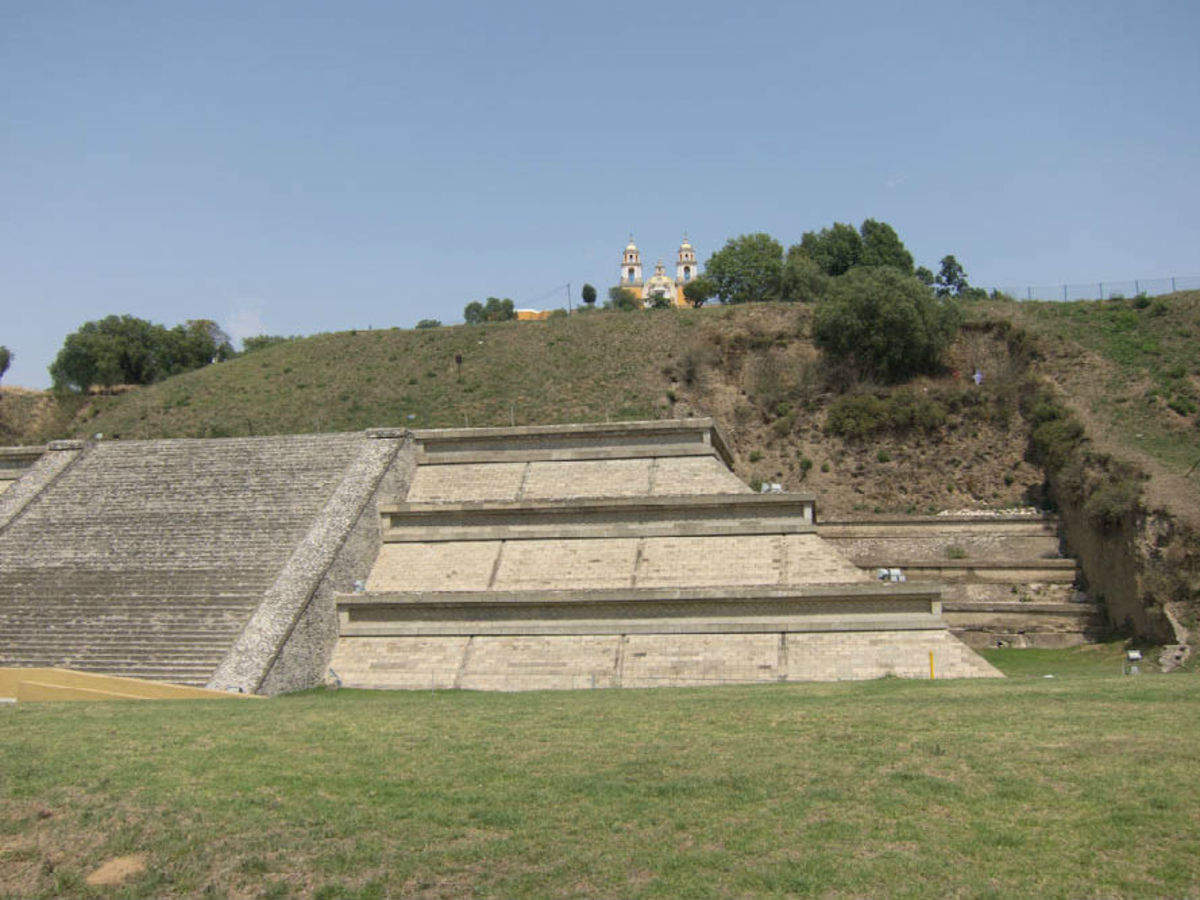
For generations, the people of central Mexico have lived in the shadow of what appeared to be a simple hillside crowned with a colonial church. To locals, this green rise—topped by the Iglesia de Nuestra Señora de los Remedios—was familiar, peaceful, and unremarkable. Yet beneath its surface rests one of the most extraordinary structures ever built: the Great Pyramid of Cholula, or Tlachihualtepetl, the largest pyramid on Earth by volume.
What many once mistook for ordinary terrain is now recognized as one of the most significant archaeological sites in the world. Recent studies, excavations, and technological surveys have revealed a complex network of chambers, tunnels, and cultural layers that are reshaping how we understand the ancient civilizations of Mesoamerica. Far from being a forgotten ruin, Cholula is emerging as a site that may transform long-held narratives about architecture, religion, and the interconnectedness of ancient societies.
A Monument Hidden in Plain Sight

The Great Pyramid of Cholula does not resemble the geometrically exposed pyramids seen in places like Teotihuacan or Giza. Instead, nature has reclaimed its exterior over centuries, covering its brick and adobe layers with vegetation. By the time Spanish settlers arrived in the 16th century, the structure was so disguised that they constructed a church at its summit, unaware they were building atop a monumental archaeological treasure.
Today, archaeologists understand that the “hill” is an architectural giant. With a base measuring roughly 450 meters on each side, Tlachihualtepetl surpasses the Great Pyramid of Giza in total volume. The structure was built in multiple phases, each layer representing different cultural periods and evolving ceremonial functions. These overlapping stages of construction offer a rare opportunity to study how ancient societies adapted, expanded, and reinterpreted sacred spaces over centuries.
Technology Reveals the Depths
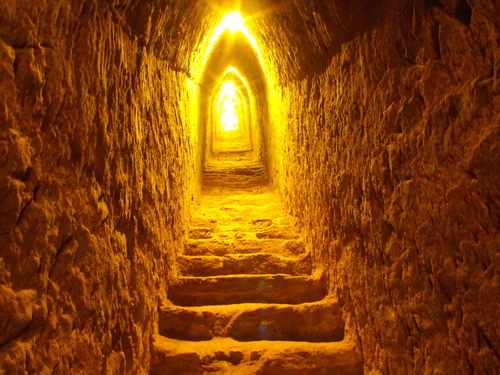
For much of modern history, large-scale excavation at Cholula was avoided in order to protect the church overhead and the surrounding community. But with advancements in non-invasive technology, archaeologists have gained unprecedented insight into what lies beneath the surface.
Ground-penetrating radar, 3D modeling, magnetometry, and endoscopic cameras have revealed more than 8 kilometers of tunnels and interior passageways. These features suggest that the builders intentionally engineered internal networks, chambers, and corridors. Some sections may have served ceremonial roles, while others likely supported structural stability or allowed movement within the pyramid.
These findings complicate earlier theories that described Cholula solely as a ceremonial mound. Instead, researchers now believe the pyramid functioned as a dynamic civic and religious center, reflecting the sociopolitical complexity of its builders.
Layers of History and Culture
One of the most striking discoveries inside the pyramid is the presence of sealed chambers containing pre-Columbian artifacts. These items—pottery, tools, figurines, ritual objects, and decorative fragments—offer invaluable information about everyday life and spiritual practices. Many of the ceramics display unique regional styles, while others show influences from distant Mesoamerican cultures, indicating trade networks and cultural exchange.
Archaeologists have also uncovered murals painted with bright mineral pigments, preserved through centuries of isolation. These artworks portray deities, animals, and symbolic motifs characteristic of the region’s ancient belief systems. Some murals depict processions or ceremonial gatherings, offering scholars rare visual documentation of practices that were never written down.
Inscriptions and iconography found within the chambers provide researchers with clues about religious hierarchies, agricultural cycles, and the role of astronomy in ancient rituals. These findings continue to challenge earlier assumptions about the societal complexity of the people who built Cholula.
Engineering Achievements Ahead of Their Time
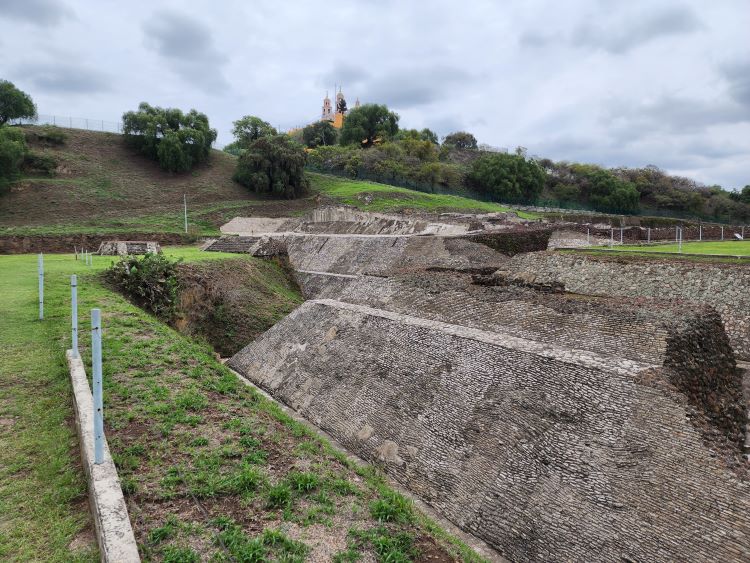
The tunnels and structural layers reveal techniques that reflect sophisticated engineering knowledge. Builders used adobe bricks, volcanic stone, and carefully layered fill to create a pyramid stable enough to endure natural disasters—including volcanic activity and frequent earthquakes in the region.
The overlapping construction phases also show deliberate architectural planning. Instead of demolishing earlier structures, new generations built directly over them, preserving sacred architecture while expanding its importance. This method allowed Cholula to grow into a layered monument that symbolized continuity, communal identity, and evolving religious significance.
Some researchers believe that the multiple construction phases indicate shifting political powers, each adding its own mark to the structure. Others argue that the expansions reflect population growth or increasing regional influence. Whatever the explanation, Cholula stands as evidence of cultural resilience and innovation.
A Center of Religion and Society
Beyond its architectural achievement, the Great Pyramid of Cholula was once a vital religious, political, and social hub. The surrounding city—one of the largest in the pre-Hispanic world—was a crossroads for cultures across Mesoamerica. Its location made it a key point of exchange, ceremony, and diplomacy.
The pyramid’s construction may have been tied to worship of Quetzalcoatl, the Feathered Serpent deity common in various Mesoamerican traditions. However, newer discoveries suggest that Cholula served broader purposes. Artifacts from different cultural groups found in the pyramid’s interior indicate that people from multiple regions may have participated in its rituals or used it as a meeting place.
This diversity challenges the former idea that Cholula belonged exclusively to a single culture or ethnic group. Instead, emerging evidence suggests it functioned as a shared ceremonial space for multiple societies across many generations.
Murals as Windows Into Ancient Life
Among the features that captivate archaeologists the most are the vibrant murals preserved inside sealed chambers. These artworks provide rare insights into rituals, attire, cosmology, and daily activities.
Some murals show stylized animals that hold symbolic meaning. Others feature geometric patterns, figures engaged in ritual practices, or scenes that may represent mythological stories passed down orally for centuries. These images help bridge the gap between archaeological evidence and cultural interpretation, giving historians visual clues that written records do not provide.
The preservation of these murals contributes significantly to understanding how ancient societies conveyed stories, teachings, and community identity through art.
Transforming Our Understanding of History
The discoveries at Cholula challenge long-standing narratives about ancient civilizations in the Americas. Too often, historical accounts underestimated the engineering and cultural achievements of pre-Columbian societies. The findings at Tlachihualtepetl demonstrate not only advanced architectural knowledge but also complex societal structures, spiritual traditions, and regional interactions.
These insights help correct misconceptions about indigenous cultures and highlight their role as innovators, thinkers, and architects of vast ceremonial landscapes.
A Living Monument With Global Significance
The Great Pyramid of Cholula continues to be studied with care. Archaeologists, historians, and conservationists are working together to preserve its delicate interior, protect its murals, and responsibly expand research while maintaining respect for the modern community above.
As the site reveals more of its past, it reminds us of the depth of human creativity and the interconnectedness of ancient societies across continents. What once seemed like a quiet hill now stands as a monumental record of thousands of years of cultural development.
Every discovery within its tunnels reinforces a simple but powerful truth: the history of human civilization is broader, more intricate, and more interconnected than earlier generations ever imagined.
Sources
- INAH – Instituto Nacional de Antropología e Historia
- Atlas Obscura – “The Great Pyramid of Cholula”
- UNESCO World Heritage Centre – Archaeological significance of Cholula
- Archaeology Magazine – Features on non-invasive pyramid exploration
- Smithsonian Institution – Mesoamerican cultural analyses
