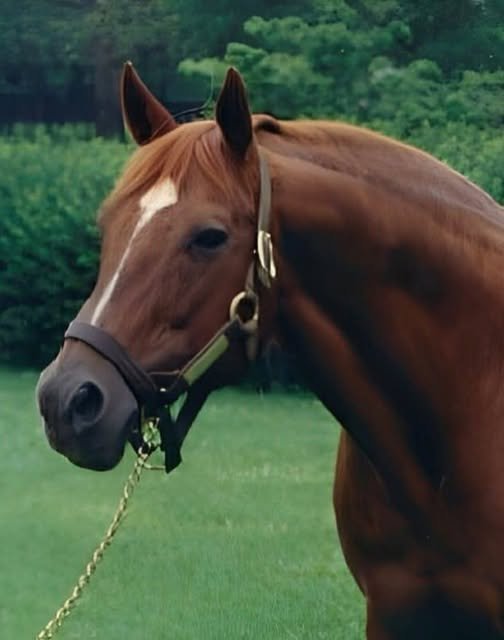

Some stories in horse racing begin with quiet promise, while others ignite with a spark so bright that the world cannot help but watch. On a warm summer afternoon at Saratoga Race Course, a young chestnut colt stepped onto the track and gave spectators a glimpse of history in the making. Long before he became one of the most celebrated racehorses in the world, Secretariat’s rise to greatness was still unfolding. The Sanford Stakes became one of the first races that hinted at the extraordinary journey ahead.
This is more than a retelling of a single victory. It is an exploration of how racing legends form, why certain horses captivate our imagination, and how culture and science together help explain the lasting fascination with equine athletes. Secretariat’s performance in the Sanford Stakes represents not just a race, but a moment where talent, training, and intuition came together with remarkable clarity.
A Story Set at Saratoga
The Build-Up to the Sanford Stakes
The Sanford Stakes, a prestigious two-year-old race held at Saratoga Race Course in New York, has long been known for showcasing future stars. In 1972, excitement buzzed through the stands as fans debated which young contender might claim victory. Secretariat, a promising colt already beginning to attract attention, entered the race at 3-2 odds. Yet he was not the favorite. That honor belonged to Linda’s Chief, a talented competitor listed at 3-5.
The contrast between the two horses added a sense of suspense. Linda’s Chief had developed a reputation for speed and consistency, while Secretariat was still revealing the extent of his potential. Although observers recognized his strong build and smooth stride, no one could yet predict what he would become.
Behind the scenes, jockey Ron Turcotte understood that Secretariat was maturing rapidly. Turcotte had experienced countless races, but he also possessed an instinct for recognizing exceptional ability. Even so, he approached the Sanford with patience, knowing that a young horse’s development must be handled thoughtfully.

The Break from the Gate
When the gates opened, Secretariat started calmly rather than aggressively. His early pace was measured, a trait that would later become one of his strengths. Instead of rushing to the front, he settled behind the leaders, conserving energy while assessing the field. This was not a display of hesitation but rather a calculated rhythm, one that allowed him to accelerate exactly when he needed to.
As the horses moved into the turn, the crowd could feel the anticipation building. The two favorites were well positioned, and observers watched closely for signs of the decisive move.
Secretariat’s Defining Move
Power Through the Stretch
Approaching the stretch, Secretariat began to advance. The race chart from the Daily Racing Form described him being “sent up behind the leaders,” an indication of the precise timing Turcotte used to guide the colt forward. With smooth confidence, Secretariat moved between Trevose and Northstar Dancer, claiming the lead as they entered the final furlong.
From that moment, the outcome felt clear. Secretariat lengthened his stride with a power that seemed both controlled and natural. Linda’s Chief made a strong rally, demonstrating the skill that had earned him favoritism, but Secretariat held firm and continued to pull away.
The final time for the six-furlong race was 1:10 flat, an impressive performance that spoke to Secretariat’s developing speed and endurance. For many spectators, the race confirmed what they had hoped: the chestnut colt was something special.
Turcotte’s Trust in the Young Colt
Perhaps the most remarkable detail was how Turcotte handled the ride. He did not ask Secretariat for his maximum effort, nor did he push him through the final strides. Instead, he remained steady in the saddle, allowing the colt to finish comfortably.
Turcotte’s decision reflected a deep understanding of equine development. A two-year-old still building strength and experience benefits far more from a measured approach than from aggressive urging. Turcotte recognized the talent beneath him and chose to protect it rather than test it prematurely.
His calm, observant riding style allowed Secretariat to run freely and build confidence. In hindsight, it demonstrated the trust that would later define their partnership during the Triple Crown season.

The Cultural Significance of Secretariat’s Early Races
When a Horse Becomes a Symbol
Secretariat’s emergence as a racing icon aligns with a long tradition of horses capturing public imagination. Throughout history, horses have been symbols of energy, resilience, and human aspiration. From the legendary steeds of mythology to the working horses that shaped societies, these animals have held a central place in cultural storytelling.
Races like the Sanford Stakes contribute to this broader narrative. When a horse shows promise, spectators begin to project meaning onto its achievements. Secretariat, with his commanding stride and calm demeanor, quickly became more than a competitor; he became a symbol of excellence and potential.
The Media’s Growing Interest
As news outlets reported on Secretariat’s Sanford Stakes victory, interest in the young colt intensified. Sportswriters described him with a growing admiration, noting his balance, speed, and natural composure. While careful not to make exaggerated claims, journalists acknowledged that rare horses emerge from time to time—horses whose presence elevates the sport.
This respectful but enthusiastic coverage helped shape Secretariat’s early legend. Fans began following his progress, eager to see whether his talent would continue to unfold.
Scientific Perspectives on Equine Athleticism
What Makes a Horse Like Secretariat Stand Out?
Modern equine science offers insight into why certain horses excel. While talent alone does not guarantee success, several key factors contribute to exceptional performance:
Physiological Advantages
Horses with well-developed cardiovascular systems can maintain strong oxygen circulation during intense exercise. Secretariat, later studied by experts, was believed to possess natural cardiovascular efficiency, though many claims about unique anatomical features remain speculative rather than officially documented.
Efficient Movement
Biomechanics researchers often highlight stride length and efficiency as crucial elements in equine racing. Secretariat’s stride was widely noted for its smoothness and rhythmic consistency.
Behavioral Traits
Temperament plays a significant role in racing. Calm, focused horses often perform better under pressure. Secretariat exhibited a composed temperament early in his career, allowing trainers to develop him without unnecessary stress.

The Role of Training and Human Partnership
While natural ability forms the foundation, training, nutrition, and consistent care shape how a young horse progresses. In Secretariat’s case, trainer Lucien Laurin and jockey Ron Turcotte created an environment that allowed him to mature steadily.
Their approach aligned with modern equine welfare research, which emphasizes:
• gradual conditioning
• balanced workloads
• strong horse-human communication
• mental and physical well-being
Secretariat’s development reflected a partnership built on observation, patience, and trust. The Sanford Stakes served as an early example of how effective teamwork can guide young athletes.
Legacy of the Sanford Stakes Victory
A Moment That Hinted at Greatness
Looking back, the Sanford Stakes is often viewed as one of the turning points in Secretariat’s early career. While it was not the most famous or dramatic race he ever ran, it marked a moment when potential began transforming into undeniable ability.
Spectators recognized the elegance of his movement, the intelligence of his racing mind, and the effortless way he responded to Turcotte’s guidance. This early display of talent contributed to the growing excitement that would eventually build toward his Triple Crown campaign.
Why Early Races Matter in Racing History
Many legendary racehorses have defining early victories that reveal their future promise. These races become milestones in their stories, illustrating the beginning of a trajectory that inspires admiration long after their careers end.
The Sanford Stakes holds that place for Secretariat. It represents the moment when he began to step into the role that history would later assign him: not just a fast horse, but a rare champion whose legacy continues to inspire new generations.

Reflection: What Secretariat’s Story Teaches Us About Human Curiosity
Secretariat’s performance in the Sanford Stakes is more than a sports moment. It reflects something fundamental about human curiosity and our desire to understand excellence. From ancient stories to modern scientific studies, people have always been fascinated by extraordinary animals. Through horses, we explore ideas of potential, partnership, and the meaning of achievement.
The story of Secretariat reminds us that greatness often begins quietly and grows through thoughtful care, observation, and respect. It encourages us to remain curious about the natural world, to appreciate the connections we build with animals, and to celebrate the harmony that emerges when talent and guidance come together.
